Plastics

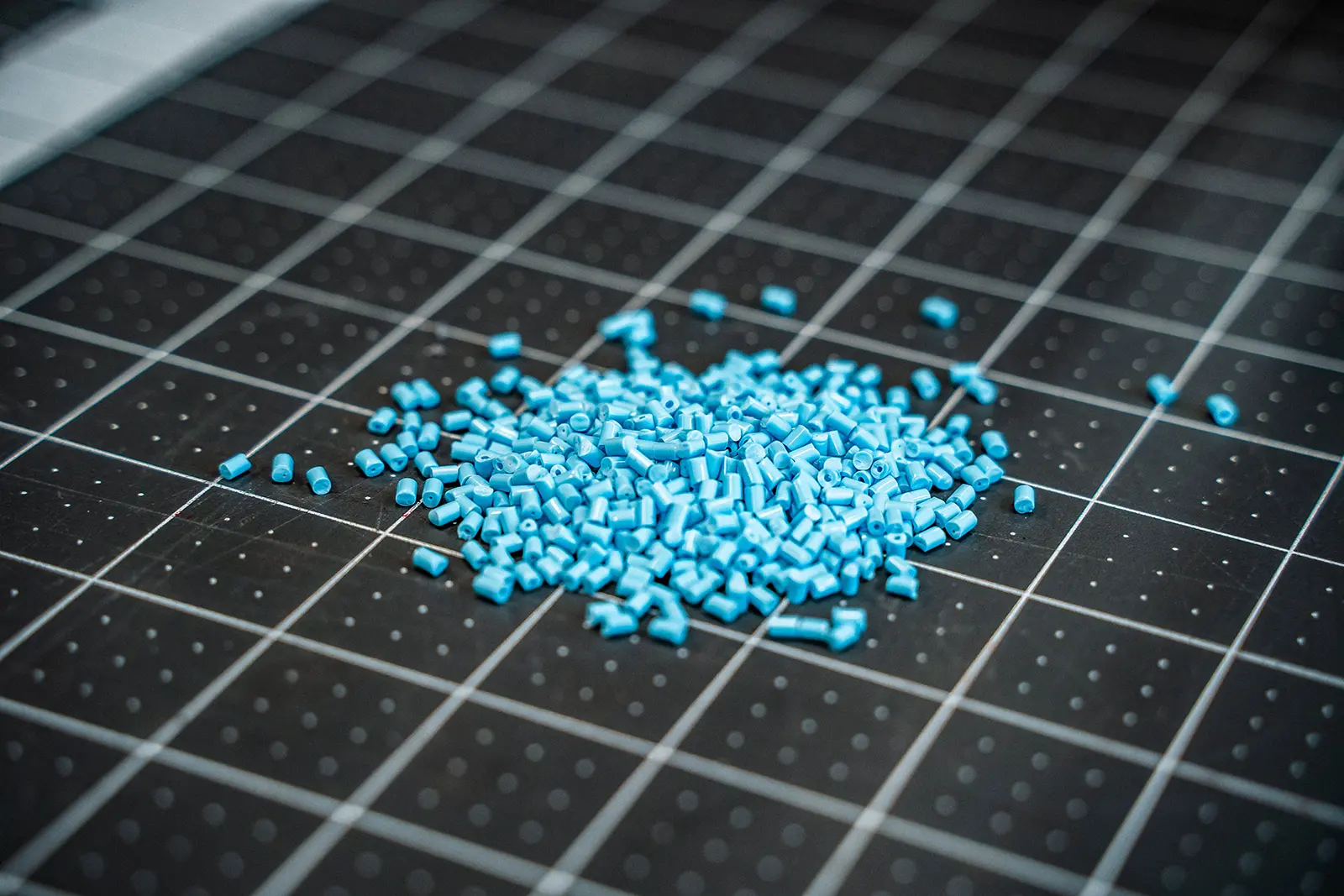
Colourful plastic pellets

Straight from injection moulding.

3D printed plastic part

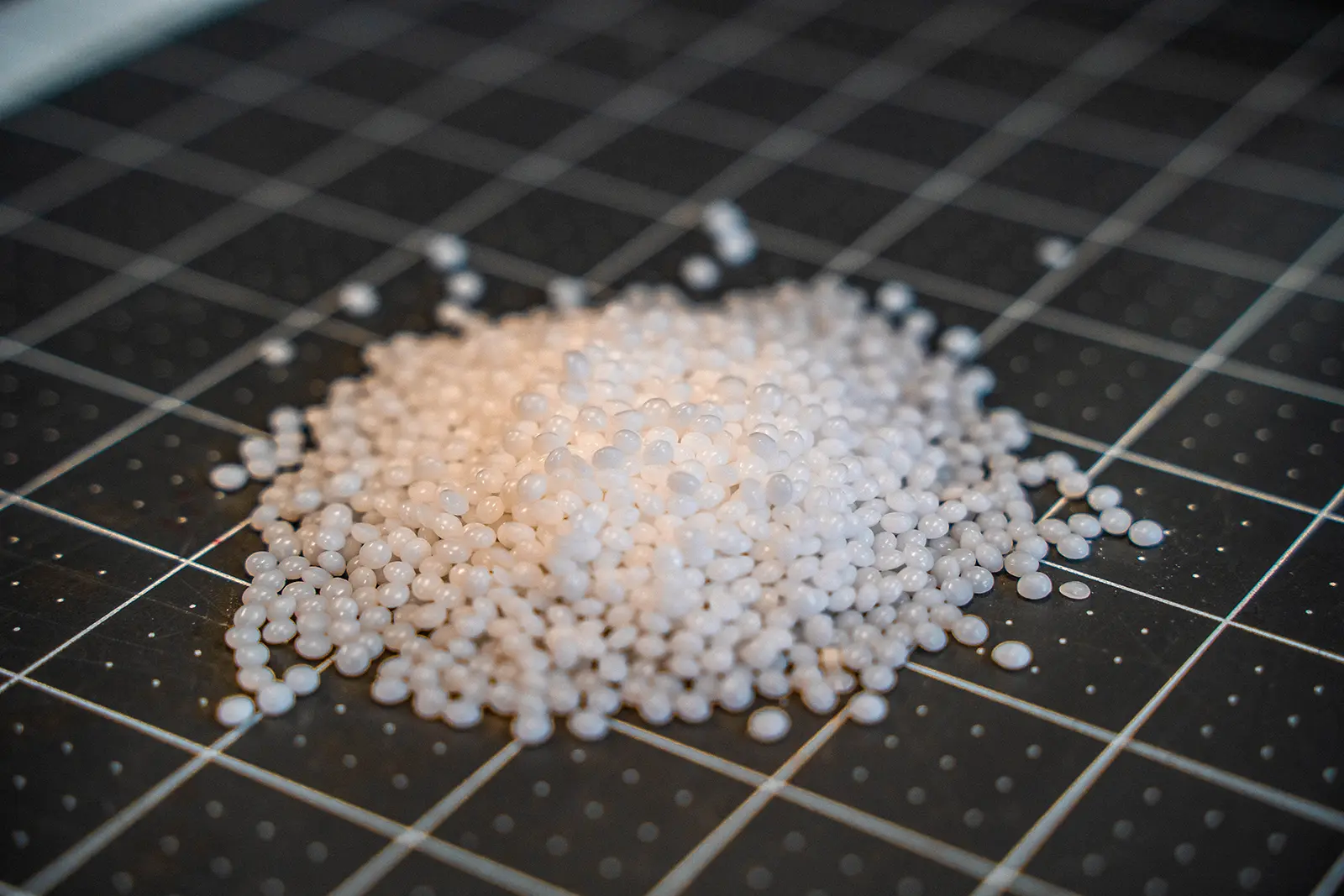
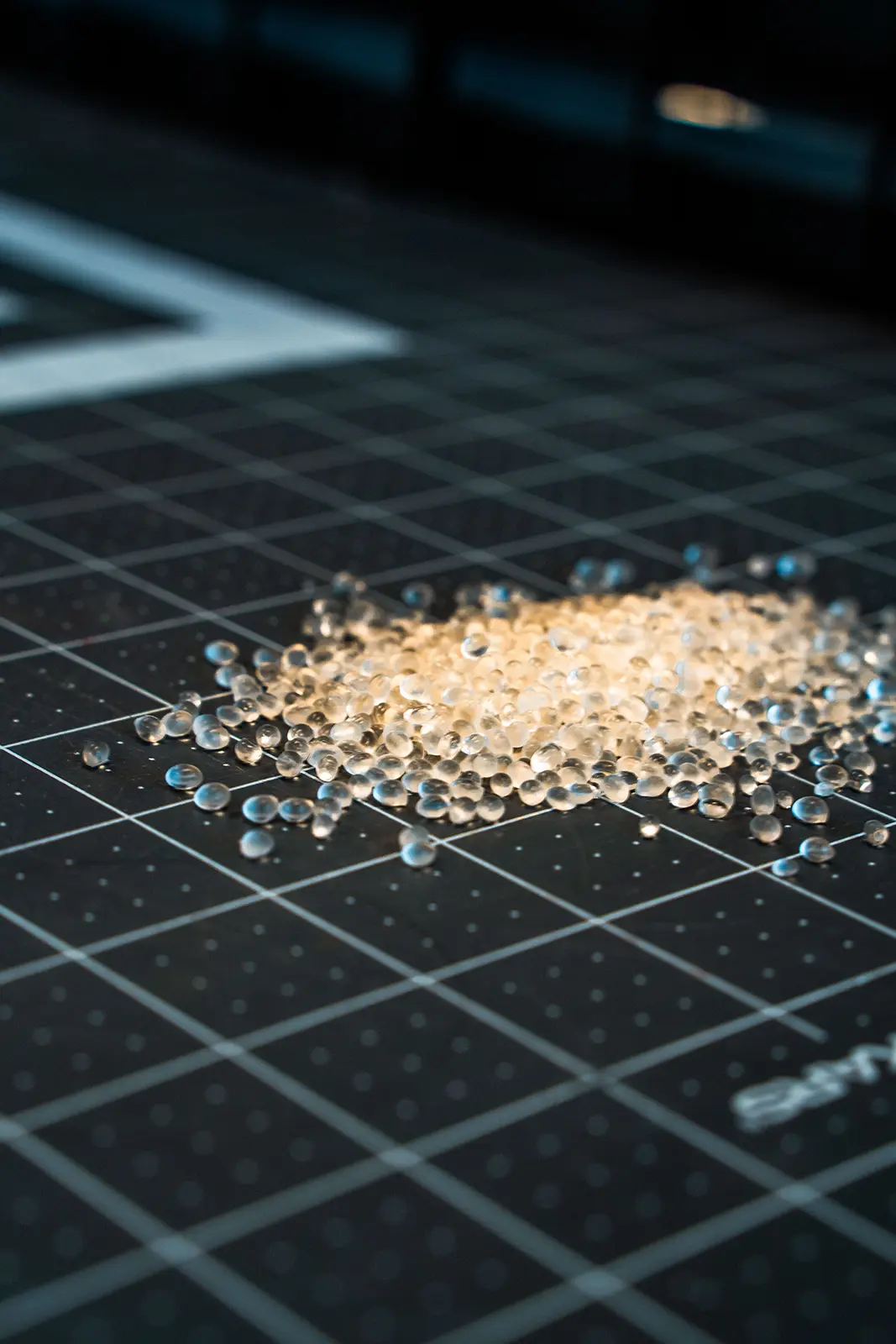
In principle, almost every thermoplastic can also be processed as pellets. Plastic pellets come directly from the injection moulding industry, are considerably cheaper than filament and available in an enormous variety.

That makes them ideal for prototypes, series production and material testing.

Pellets
Technology

Pellet extruders are a real advantage for the circular economy.

Regulations increasingly require a share of recycled content. Pellet printing enables straightforward in-house recycling and the deliberate blending of regrind with virgin material.

Technical benefits: high throughput, stable material feed, no filament step in between.

Regulation & recycling

Recycled content
Sustainability
Cost efficiency
Availability

Materials, recyclate and limits

Why straight from the pellets

Filament is processed pellet material: melted, drawn into a strand, wound and packaged. Every one of those steps costs money and narrows the choice. We skip them and process the pellets the plastics industry supplies anyway.

That has three consequences: the material costs a fraction of the price, the output rate is many times higher at up to 500 grams per hour, and the choice of materials is not limited to whatever someone offers as filament.

Which plastics we process

  • Standard materials: PLA, PETG, ABS, ASA, PP, PE – for fixtures, housings and models.
  • Engineering plastics: PA 6 and PA 12 for loaded parts, polycarbonate for tough and transparent applications.
  • Fibre-reinforced compounds: PPS-CF and PA-CF, where stiffness and temperature resistance count.
  • Elastomers: TPU and TPE for flexible zones and damping.

Properties and processing windows are stated on the respective datasheet – ask for it for your application.

What filament cannot do

The extruder feeds the pellets straight into the screw. There is no strand for a drive to push through – and that removes the limits filament imposes:

  • Very soft elastomers. A TPE at Shore 10A would not be printable as filament. From pellets we process it.
  • High fibre contents. Carbon fibres at a high fill density are possible, glass fibres likewise.
  • Gradients within the part. The blend ratio changes during the print. The extruder creates the transition, not extra print time.

Regrind and recyclate

Pellets can be kept in a closed loop. Failed prints, support structures and sprues are ground up and fed back in as a share of the feedstock, as is recyclate from other sources. How high that proportion may be depends on the material and the part; we settle that before the first order rather than afterwards.

If you want to go one step further, you blend additives in during the print – see blending compounds and additives live.

Where plastics reach their limit

When temperature, wear or chemical attack are too much for the material, the next step is technical ceramics. The same extrusion principle, a different material – and two additional process steps after printing.

You can have parts produced through our 3D printing contract manufacturing; if you want to print yourself, you will find the right machine under industrial 3D printers.