
Functional parts in next to no time.
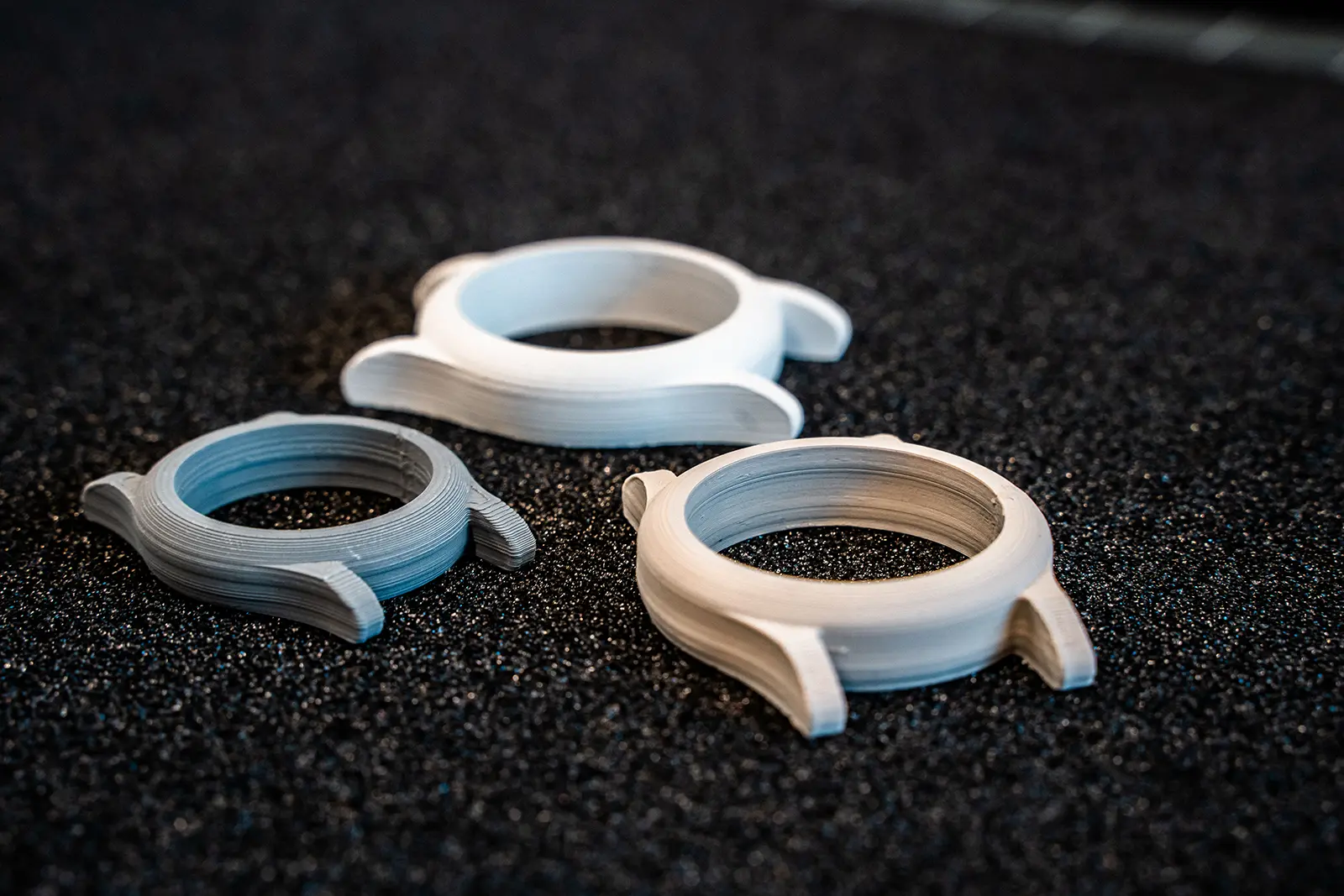
We offer 3D printing services for technically demanding materials and applications. Our focus is on functional parts in ceramics, high-performance plastics and modified compounds – from a single piece to small series.
Ideal for companies that want to use additive manufacturing without running their own machines, material tests or process development.
Upload your 3D file directly and set the key parameters for your enquiry. Once uploaded, we check feasibility and come back to you with a binding quote.
Process & upload
A simple path from file to finished part.Our contract manufacturing is designed for functional, reproducible parts for business customers.
Typical uses include prototypes, functional samples, jigs and fixtures, as well as small and pilot series.
Terms: minimum order value €100 net. Our terms and conditions apply.
Technical scope
Frequently asked questions about 3D printing services
What does 3D printing contract manufacturing cost?
Pricing depends mainly on part volume, material and machine time. Because 3D printing involves no tooling costs, contract manufacturing is economical even at low quantities. You can get an initial estimate straight from our cost calculator.
At what quantity does 3D printing contract manufacturing pay off?
Additive manufacturing is economical for single parts, prototypes and series ranging from a few to several thousand pieces per year. Because no tooling is required, the high upfront investment of injection moulding disappears – and multiple variants cost no extra.
Which materials do you process?
We process standard plastics such as PLA, PETG, ABS and PP, as well as engineering materials, fibre-reinforced compounds, elastomers (TPE) and pellet-based special blends. We match the material to the load, environment and requirements of your part.
Can the composition of TPE be customised?
Yes. Because we print from pellets, TPE compounds can be adjusted deliberately – for example by blending in additives, blowing agents for foamed structures or fibre reinforcement. Hardness, damping and weight can be matched to your application.
Which file formats do you need for an enquiry?
For calculation and production we need a 3D file in STL or STEP format. STEP is particularly suited to precise technical parts, while STL is the common standard for 3D printing.