
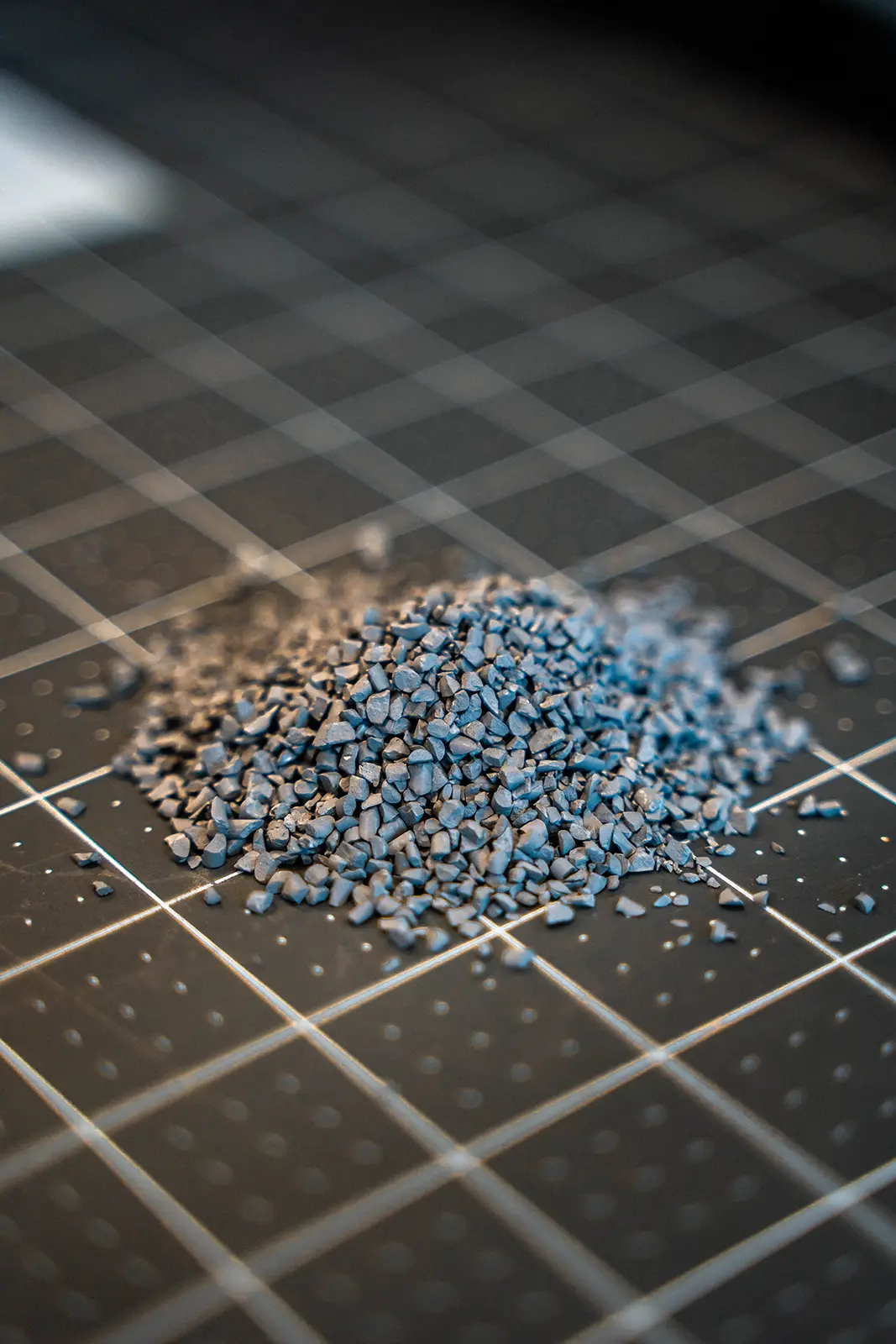
In 3D printing we fundamentally distinguish between filament-based and pellet-based systems, as we have described in earlier articles. While the filament-based approach processes a pre-made plastic strand, pellet-based systems work directly with materials from the injection moulding industry. These are conveyed by an extruder screw, melted, homogenised and then dispensed through a nozzle, building up a part layer by layer. The big advantage here clearly lies on the material side: pellets are available far more cheaply and at the same time offer a much wider range of materials and additives.
Material feed as the limiting factor
In practice, however, it turns out that the material feed can become the limiting factor, particularly at higher throughput rates or with more complex material combinations. Conventionally you work with a hopper directly on the extruder. That hopper is always limited by its volume, though, which means material has to be topped up regularly. With longer print times or larger parts in particular, that means more supervision and, in the worst case, interrupts the process. Alternatively the material can be fed in from outside, making larger volumes available and allowing the machine to work far more autonomously.
Our development project: pneumatic conveying for pellets
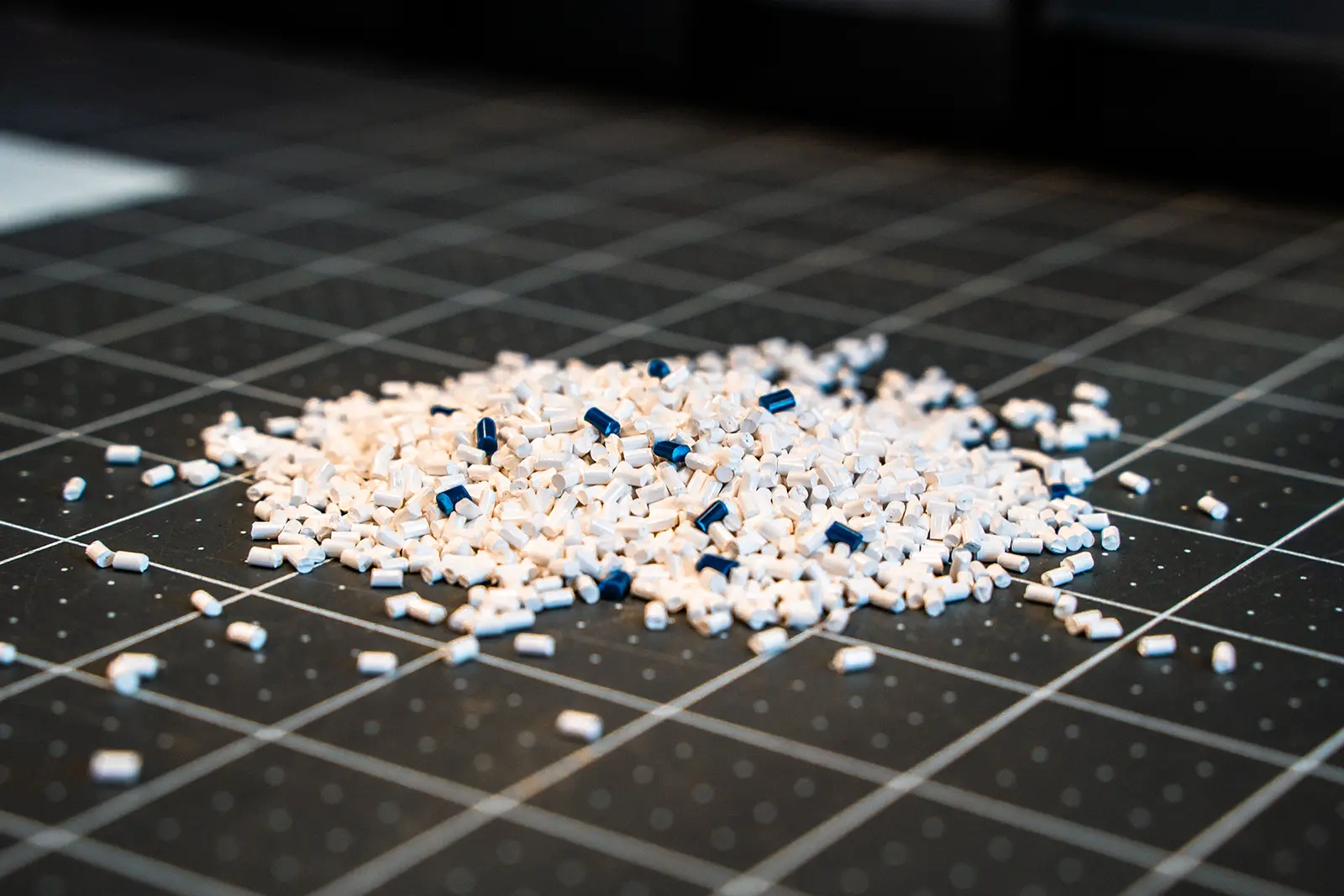
This is exactly where our current development project comes in. The aim is to develop a pneumatic conveying system for pellets that enables a continuous, automated material feed. The pellets are transported from the material container to the extruder through a hose system by means of an air stream. Systems like this are well known in the plastics industry in principle – what matters to us, though, is how we integrate and extend them in 3D printing.
Intelligent control: conveying on demand
An essential element is the intelligent control of the system. An intermediate hopper on the extruder monitors its own level continuously. As soon as it falls below a defined value, conveying starts automatically and transports fresh material in. Once the desired level is reached again, the process stops. That means conveying does not run permanently but only when genuinely needed. The system therefore works efficiently and enables a stable, largely autonomous printing process with no manual intervention.
Blending within the conveying system
Another central aspect of our development is the ability to blend several material components together while they are being conveyed. In conventional systems mixing only happens in the extruder, which depends heavily on the geometry and length of the screw. With compact extruders in particular, homogenisation is often not sufficient. Our approach is therefore to let blending happen before the extruder. Several components are brought together in the conveying system and transported by the air stream, which produces an initial mix. In principle that replaces manual pre-mixing – only continuously and reproducibly, integrated into the process.
As a result the material reaches the extruder in a more homogeneous state, which increases overall process stability. At the same time it opens up the possibility of working deliberately with additives: colourants, blowing agents or other functional components can be introduced directly into the material stream. Combining regrind with virgin material also becomes considerably easier this way. In the context of recycling and sustainable material use in particular, that is an important step, since material streams can be configured more flexibly and new properties set deliberately.
Scalability: several extruders from one source
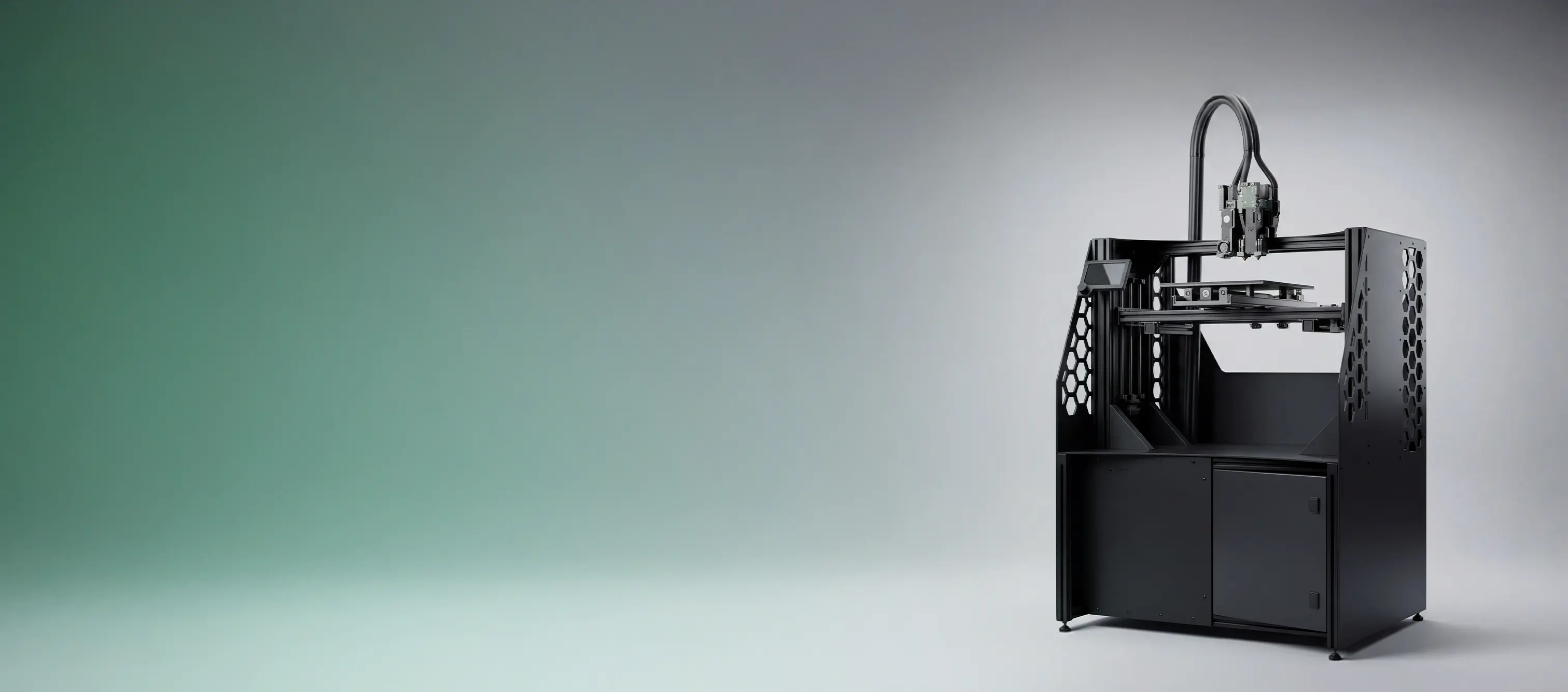
Another aspect is the scalability of the system. In our MultiPrint approach we work with several print heads in parallel. The pneumatic conveying system is designed so that several extruders can be supplied with material at the same time. A central system feeds several print heads and thereby guarantees a continuous material supply. That makes it possible not only to produce larger parts efficiently but also to run parallel processes stably.
Integration: standalone or built in
Alongside this we are developing the system so that it can be used both standalone and integrated. It will be possible to run the pneumatic conveying system as a standalone solution with its own control and user interface. At the same time it can be connected directly into our existing systems via an interface, so that all control runs through the existing user interface. For the user that means maximum flexibility, since the system can be retrofitted or integrated fully into new machines.
Conclusion
Overall this system considerably broadens what is possible in pellet-based 3D printing. The combination of automated conveying, intelligent control and upstream material blending enables not only more efficient processes but also far more scope in material development. It is not just about getting material to the extruder but about actively influencing material properties within the process – and thereby opening up new fields of application.