
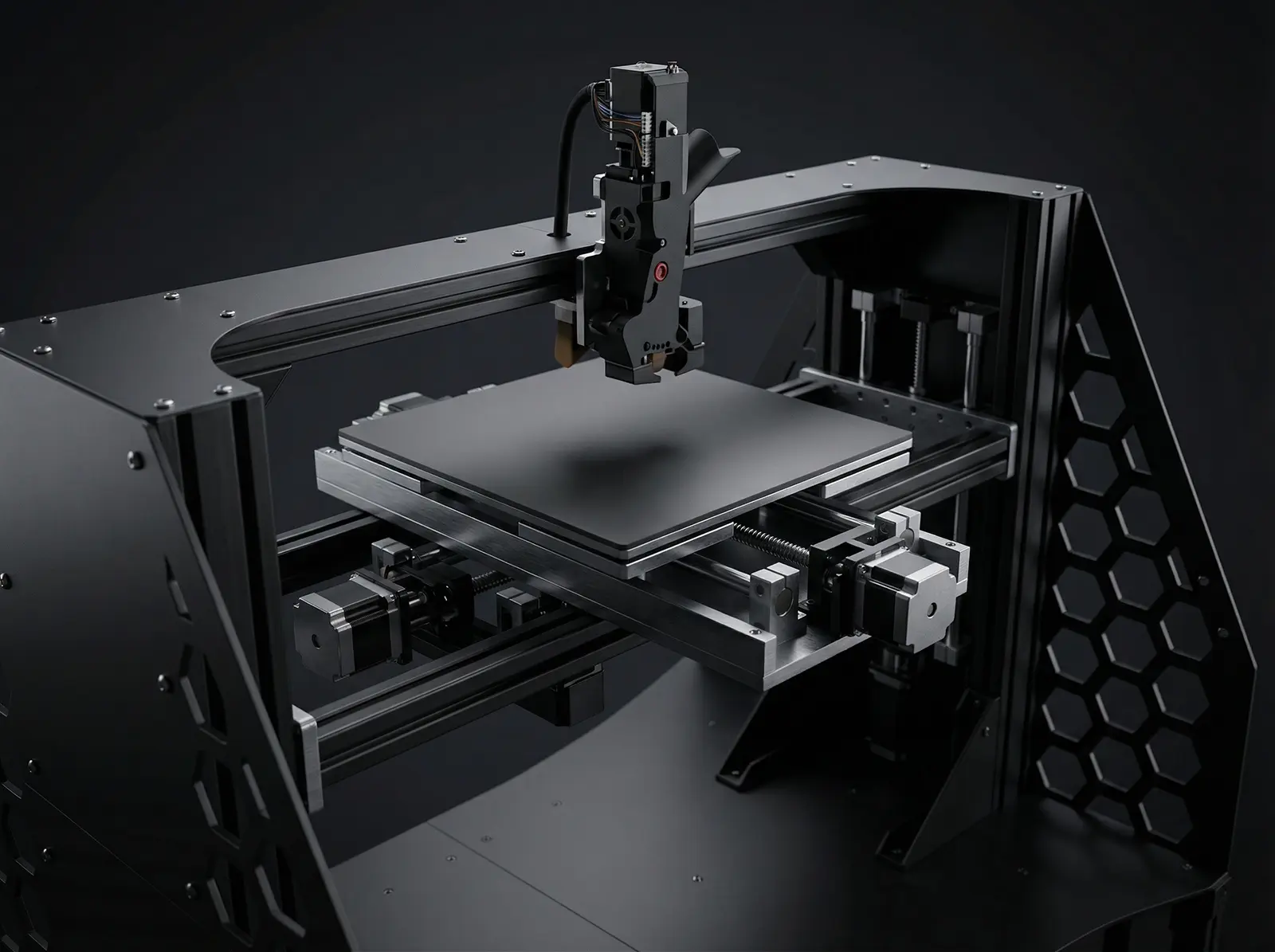
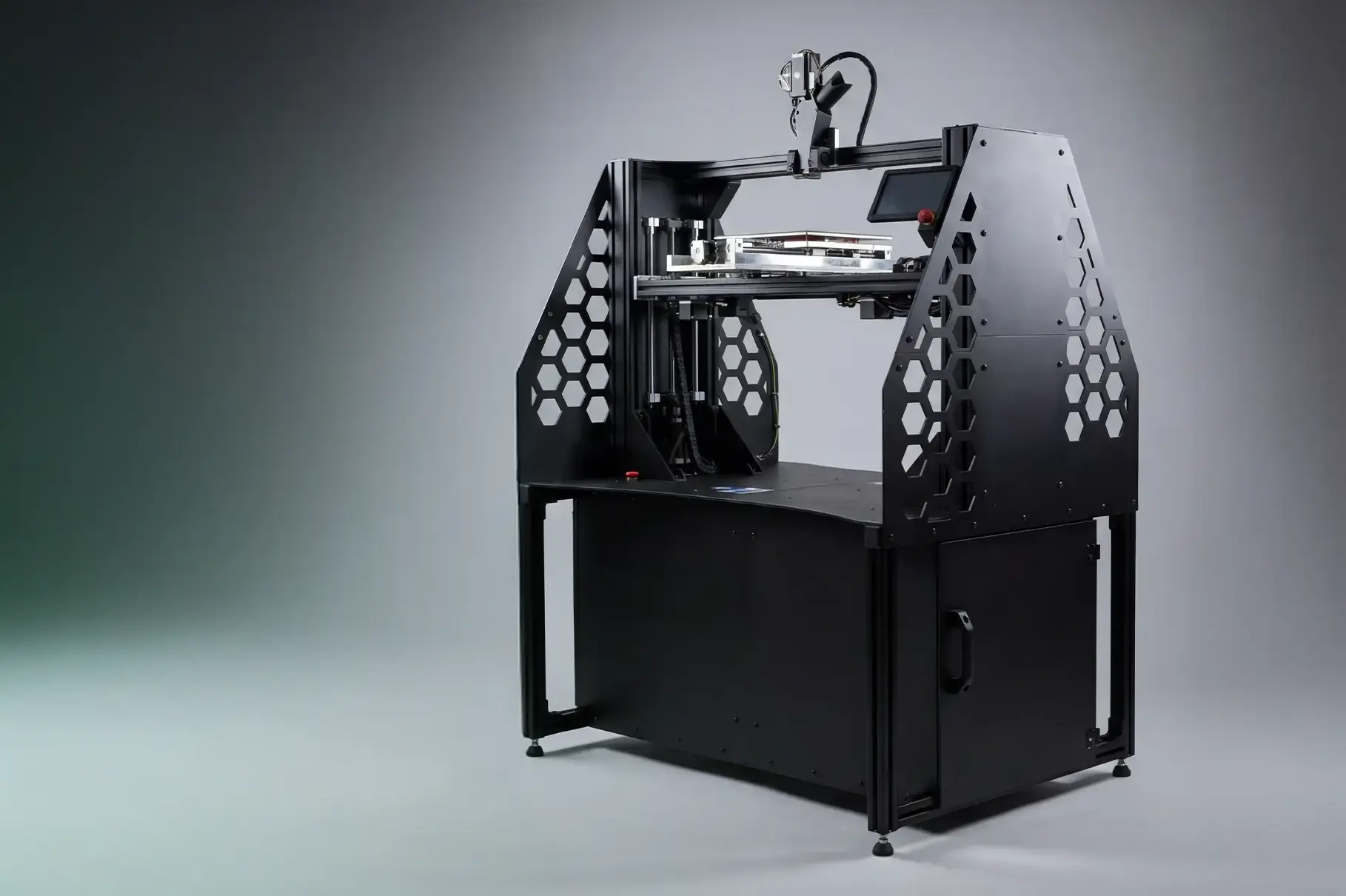
We have completed our first sales order in the field of pellet-based 3D printing systems, and were able to deliver three identical machines to one customer straight away. Specifically, these are three KeraPrint systems configured with a build volume defined by the customer. For us this is an important milestone, as it is not only our first order in this field but also covers several systems in the same specification.
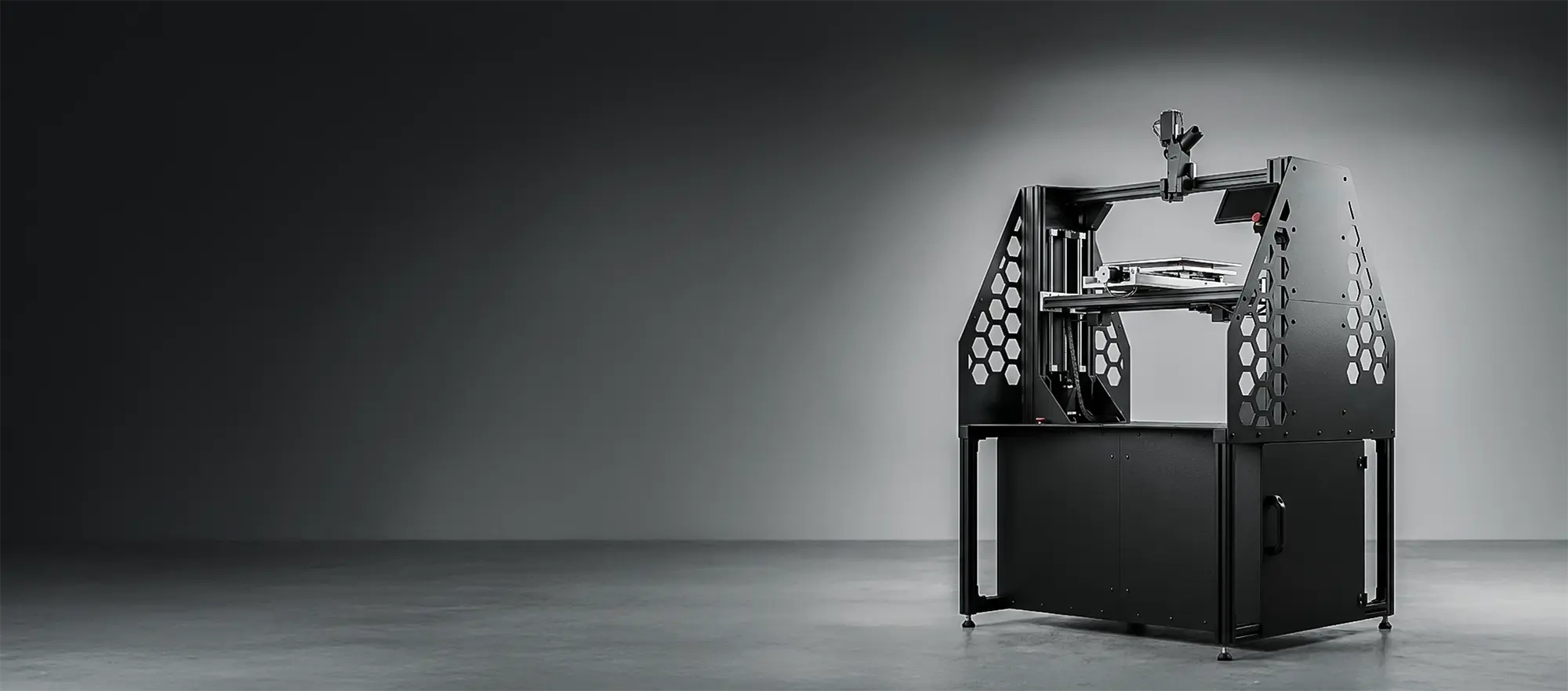
Tabletop version: a new machine class
In the course of this project a further design development emerged. Until now the KeraPrint had been designed as a floor-standing machine – a classic larger, free-standing system. Driven by the requirements of this order, we developed a more compact version in parallel, built as a benchtop system. This tabletop version has a somewhat smaller build chamber but allows considerably more space-saving integration and brings reduced system costs with it. We are therefore adding a further machine class to our portfolio without compromising on fundamental system quality.
Designed for abrasive compounds
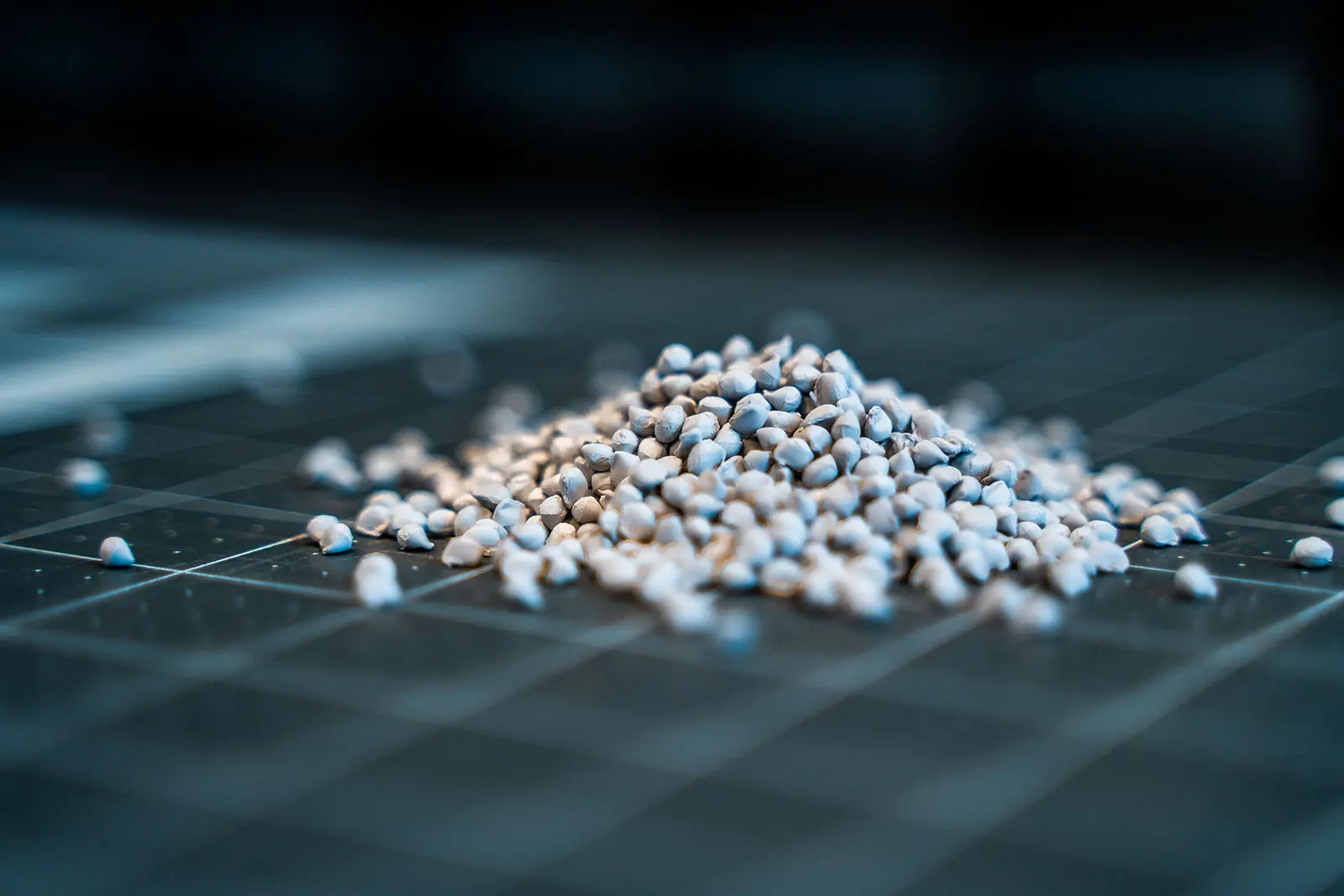
The KeraPrint is designed specifically for printing pellet-based compounds. These include ceramic-filled materials, metal-filled plastics and highly abrasive materials in general. This is precisely where one of the central challenges in designing such a system lies, because these materials place far greater demands on the mechanical components than conventional plastics do. All the relevant parts in the extruder are therefore specified accordingly: the barrel, screw and other conveying components are hardened and designed for continuous use with abrasive materials, so that stable operation is assured over long periods too.
Mechanics: substantial despite the compact design
Despite the compact design – particularly in the new benchtop version – the mechanical structure remains deliberately substantial. Large linear guides are used on all axes, along with ball screws for movement in X, Y and Z. This combination gives the system high stiffness and therefore consistently high part quality. At the same time comparatively high print speeds remain possible, in the region of 150 to 200 mm/s depending on the application.
Industrial electrics to standard
Another important point is the industrial specification of the machine as a whole. The control cabinet and electrical components comply with the usual standards and are fitted with appropriate safety mechanisms. These include safety relays and components from well-known manufacturers such as Siemens and Meanwell. This ensures that the systems can be operated safely in an industrial environment.
Our own user interface for production use
All of this is complemented by our own user interface, designed specifically for use in a production environment. The aim is to make 3D printing as accessible as possible – including for users without deep experience in the field. Many workflows are simplified, processes are supported and the operating effort is kept as low as possible, without losing control over the important parameters.
Outlook
For us this order is an important step, since we were able to place several systems in the same specification at once while also developing a new machine variant. The close dialogue with the customer is particularly valuable: we are in continuous contact, coordinate closely and support the use of the systems. We look forward to the results achieved with the machines and to completing the order in full shortly.