
At heart the calculation is simple. Injection moulding has high fixed costs and low unit costs; 3D printing has no fixed costs and higher unit costs. Somewhere the two lines cross. What is interesting is where exactly – and whether quantity is the right criterion at all.
The line runs at around 10,000 parts
As a rule of thumb: up to roughly 10,000 parts, printing is usually cheaper. Above that a tool starts to pay off – and it does not have to be a steel tool straight away. A simple aluminium tool or vacuum casting often covers the range in between better than either extreme.
The figure is a ballpark, not a constant. It shifts with part size, material and the complexity of the tool. A small, simple part reaches the threshold earlier than a large one with undercuts.
What else shifts the calculation
- Likelihood of changes. Every change of geometry after the tool is built costs a new tool. In printing it costs a new file. If you are not yet sure the geometry is final, do not invest in steel.
- Time to the first part. A tool takes weeks, printing takes days. When the deadline is pressing, the quantity calculation is secondary.
- Variants. Ten variants of 500 pieces each are the same job ten times over in printing; in injection moulding they are ten tools.
- Stockholding. Printing on call ties up no capital in minimum order quantities. Particularly relevant for spare parts – see spare parts from 3D printing.
The material is no longer an obstacle
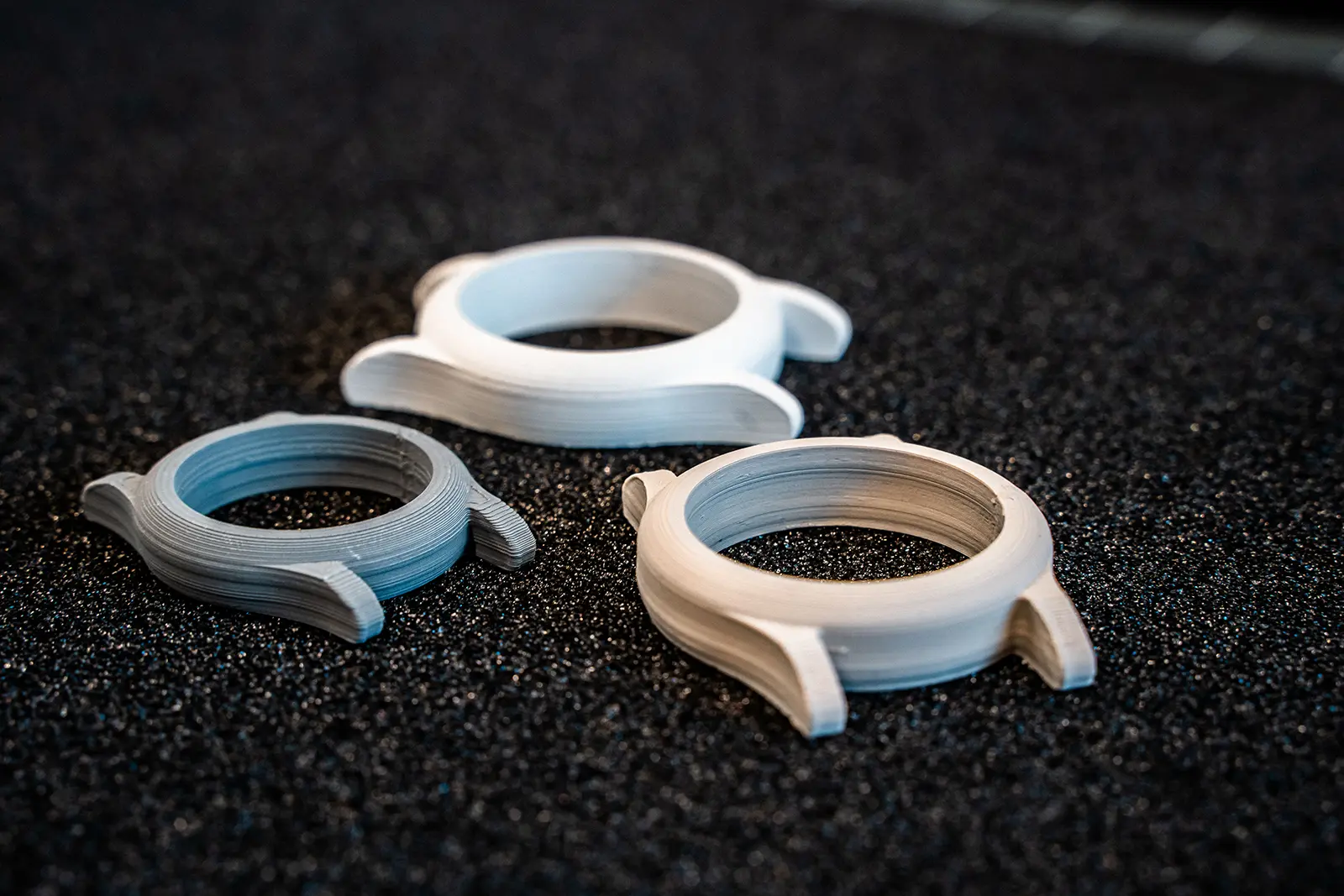
For a long time the rule was: prototype printed, series moulded, two different materials, two different sets of behaviour. With pellet-based extrusion that break disappears. We process the same injection-moulding pellets that will later go into the tool. The part off the printer therefore behaves much like the later production part – see rapid prototyping in the production material.
The mixed route we usually recommend
Print first, decide afterwards. The first hundred or thousand parts from contract manufacturing, test the market in parallel, and only talk about a tool once the geometry and the sales figures are settled. That moves the investment behind the uncertainty – and that is usually worth more than a few cents of unit cost.
With us, around 1,000 parts per order makes sense, and spread over a year considerably more. What is cheaper in your case is something we will work out for you – including when the answer argues against printing.